

-
Blog Views
4051
Patchworker Spotlight: Sekela’s Story
We spoke to Sekela Ngamilo, a 20-year-old law student from London. Sekela tells us about acting, epilepsy and the potential positive effects of lockdown for those with chronic health conditions.
“There’s always the fear that people’s misconceptions mean I won’t get hired, but on the flip side I can’t not tell people, and I know that it shouldn’t be seen as a burden. Over time, it has become something I’ve grown comfortable with and am happy to do. Discrimination comes when people don’t understand, so the more we can increase awareness, the better.”
What is your story with chronic illness?
Around the time of my A-levels, I began having seizures but had no idea what they were. Doctor’s appointments seemed to lead to dead ends, so I continued with my exams until a severe seizure led to a trip to A&E and finally a diagnosis. In the middle of my exams, I found out I had temporal lobe epilepsy.
I was put on strong medication and realised my life was not going to be quite the same. Temporal lobe epilepsy causes me to have amnesia after my seizures meaning that I don’t remember that I have them or when I’m in a postictal state (how a person is after a seizure). At times I could have one or multiple and end up somewhere with no idea how I got there. Despite the amnesia, I knew I was having seizures mid-exam; I would look up at the clock, blackout and look up again and a whole twenty minutes would have passed. I could no longer commute alone, go on nights out, stay up late, or take part in certain activities. My life took on a new rigidity: I now had to keep track of where I was and what I was doing and stick to a routine to accommodate the heavy medication I was now taking.
My place at the University of Oxford was hinged upon these exams, but it was not until I was two-thirds of the way through that I was allocated extra time. Not only had I lost my independence, but I felt I had suddenly lost the intelligence and abilities by which my whole academic trajectory had been guided.
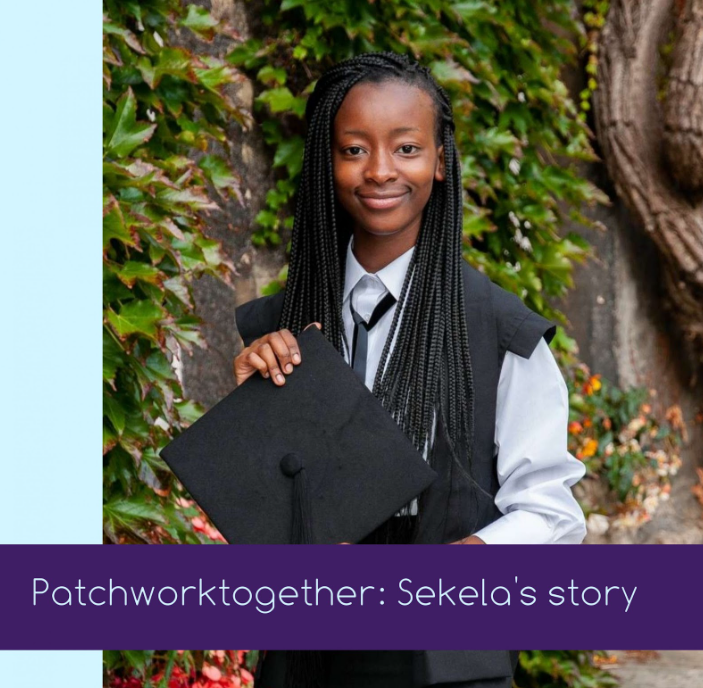
“I’m Sekela, a student who enjoys acting, art, knitting, boxing and dance.”
How did your condition affect your relationships?
My epilepsy added a whole other dimension to my relationships. I was having to try and understand my seizures through what other people were telling me, which in itself was scary because epilepsy is a hugely misunderstood condition: most people think epilepsy means suddenly dropping to the ground and having seizures. This just isn't true, so the people around me were attempting to understand it as much as I was.
Something which helped was making friends in similar situations, especially when I started university. I met people who also had epilepsy or other chronic illnesses, both through Epilepsy action (an organisation providing support) and my church. It helped me to feel human again.
You have experience in the acting industry- how did having epilepsy impact trying to secure work?
Before my diagnosis, I had a seizure on the set of a short film I was working on. We had just finished filming a scene in which I had been swimming, and remember sitting in the changing room with everyone crowded around me. What sticks out is the support I was surrounded by and the increased mindfulness that followed.
On a separate occasion, however, I was asked by a casting director “how did you relate to this character?” When I explained that I was able to understand the character through my experience of epilepsy, everyone in the room’s faces dropped. I knew at that moment that there was no chance of me landing the job.
Being in the later stage of the audition process brings conflicted feelings when it comes to being open about my epilepsy. There’s always the fear that people’s misconceptions mean I won’t get hired, but on the flip side I can’t not tell people, and I know that it shouldn’t be seen as a burden. Over time, it has become something I’ve grown comfortable with and am happy to do. Discrimination comes when people don’t understand, so the more we can increase awareness, the better.
When it comes to the world of work and chronic health issues, what needs to change?
Because of the misconception that epilepsy is just one type of seizure and the lack of recognition that epilepsy can be controlled once people have found the medication that works for them, there is a general idea held that people with epilepsy can’t work. In some cases this is true, but in many, it isn’t, and many people's seizures are not controlled because of the lack of research and funding when it comes to epilepsy. Although we are blessed with a vast amount of technology which can help (MRIs might not be fun, but they are useful) there seems to be a lack of government incentive for epilepsy research itself. In Billy Caldwell’s case (a boy whose seizures were controlled by cannabis oil) for example, it seemed that there was more concern about crime than there was care about people’s actual lives and their ability to function.
My consultant is an angel- he doesn’t view his patients simply as epileptics, he sees them as people who have epilepsy, and asks me about other things going on in my life and how they might be contributing to the seizures. The world, employers included, need to see people with epilepsy as just that - people.
What advice would you give to someone with epilepsy who wants to work?
Remember that you have a lot of strength- strength that comes from your experience with epilepsy. When an interviewer or an application form is asking about a time when you've shown resilience, think of the times you were stressed out but did not let your epilepsy or the chronic condition you are dealing with prevent you from doing things. Always remember that you’ve achieved things in spite of that.
I also think the current lockdown situation affords a lot of opportunity for optimism. Seeing how many major corporate workplaces have tailored things to make working from home productive means those who need care or can’t work in an office every day could have a lot of doors opened. You could be part of a law firm or consultancy firm without having to leave the house.

